Understanding the Difference
Citric acid is available in two primary forms: Monohydrate and Anhydrous. While chemically similar, their water content makes them suitable for different applications.

Monohydrate
Contains one water molecule (C₆H₈O₇·H₂O)

Wet Applications
Ideal for beverages, liquid formulations

Anhydrous
Water-free form (C₆H₈O₇)

Dry Applications
Perfect for powders, tablets, dry mixes
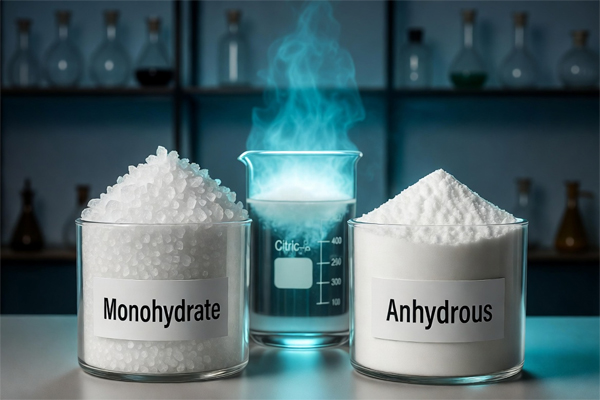
Visual comparison of both citric acid forms
Citric Acid Monohydrate
C₆H₈O₇·H₂O | Contains 7.5-9.0% Water
Key Characteristics
- Colorless translucent crystals
- Stable below 36.6°C
- Molecular weight: 210.14 g/mol
- High solubility in polar solvents
Best For
- Beverages & carbonated drinks
- Liquid pharmaceuticals
- Cosmetic liquids
- Effervescent tablets
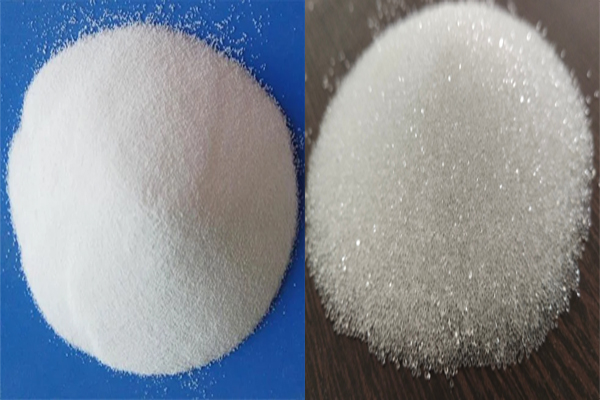
Tip: Ideal for humid environments and wet formulations
Citric Acid Anhydrous
C₆H₈O₇ | Water-free (≤0.5% moisture)
Key Characteristics
- Fine white crystalline powder
- Melting point: 153°C
- Molecular weight: 192.12 g/mol
- Low organic solvent solubility
Best For
- Powdered drink mixes
- Sour candies & confectionery
- Industrial dry processes
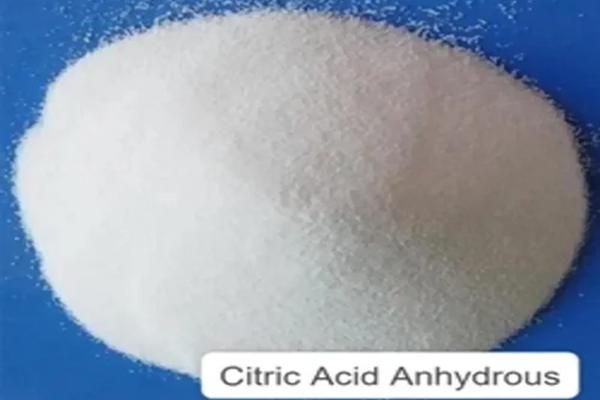
Tip: Requires dry storage to prevent moisture absorption
Detailed Comparison Table
| Parameter | Specification | Citric Acid Monohydrate | Citric Acid Anhydrous |
|---|---|---|---|
| Chemical Identity | |||
| Chemical Formula | - | C₆H₈O₇·H₂O | C₆H₈O₇ |
| Molecular Weight | - | 210.14 g/mol | 192.12 g/mol |
| CAS Number | - | 5949-29-1 | 77-92-9 |
| Physical Properties | |||
| Appearance | Visual | Colorless translucent crystals | Fine white crystalline powder |
| Water Content | % by weight | 7.5% - 9.0% | ≤ 0.5% |
| Melting Point | °C | ~135°C (decomposes) | 153°C |
| Bulk Density | g/cm³ | 0.9 - 1.0 | 0.9 - 1.0 |
| Solubility (20°C) | |||
| Water | g/100g | 59.2 | 59.2 |
| Ethanol | g/100g | 62.8 | 58.2 |
| Methanol | g/100g | 197.0 | 180.0 |
| Diethyl Ether | g/100g | 2.17 | 1.05 |
| Primary Applications | |||
| Food Industry | - | Beverages, jellies, preserves | Powdered mixes, sour candies |
| Pharmaceuticals | - | Liquid formulations, syrups | Tablets, capsules, powders |
| Cosmetics | - | Lotions, creams, liquid soaps | Face powders, dry shampoos |
| Industrial | - | Liquid cleaners, descaling | Textile processing, adhesives |
| Storage & Handling | |||
| Storage Temperature | °C | Below 25°C | Below 30°C |
| Humidity Control | - | Protect from excessive drying | Protect from moisture |
| Shelf Life | Months | 36 months | 48 months |
| Packaging | - | Moisture-proof bags | Moisture-proof bags |
Quick Selection Guide
Choose MONOHYDRATE When:
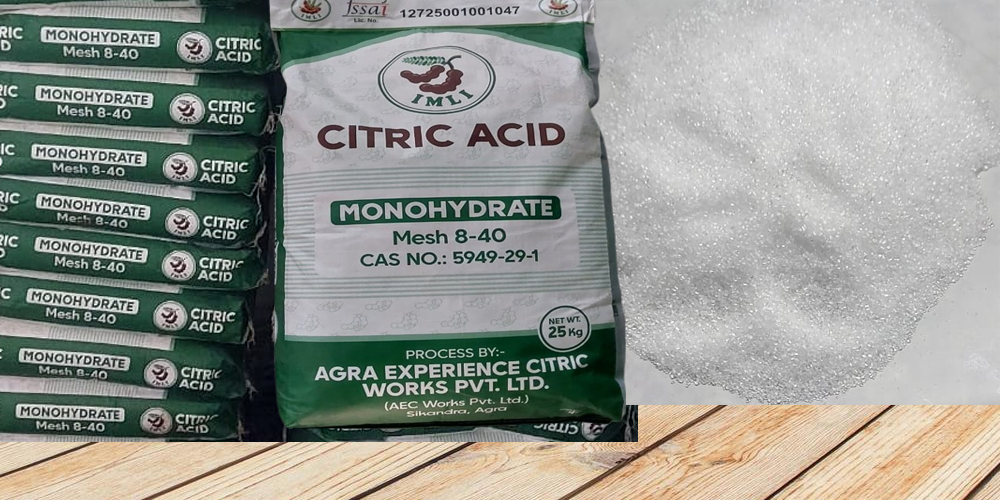
- Working with liquid formulations
- High humidity environment
- Rapid dissolution required
- Cost-effectiveness is priority
- Beverages & carbonated drinks
- Effervescent tablets
Choose ANHYDROUS When:
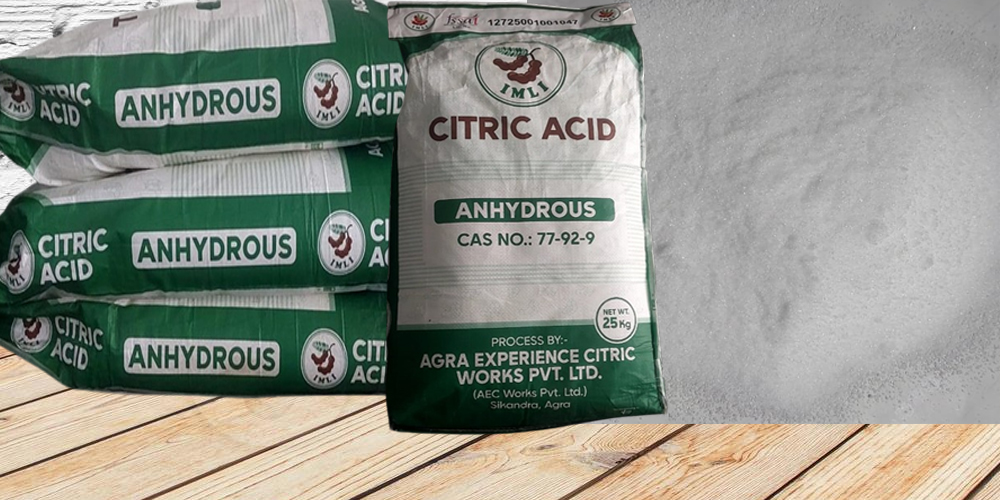
- Dry powder formulations
- Moisture-sensitive applications
- Long shelf life required
- Precise water content control
- Powdered drink mixes
Industry-Specific Applications
Food & Beverage Industry
Monohydrate Uses
- Carbonated soft drinks
- Fruit juices & nectars
- Jams & preserves
- Pickles & sauces
Anhydrous Uses
- Instant drink powders
- Sour candies
- Baking powders
- Dessert mixes
Cosmetics Industry
Monohydrate Uses
- Lotions & creams
- Liquid soaps
- Shower gels
- Hair conditioners
Anhydrous Uses
- Face powders
- Dry shampoos
- Bath bombs
- Makeup powders
Industrial Applications
Monohydrate Uses
- Liquid cleaners
- Descaling solutions
- Metal treatment
- Textile processing
Anhydrous Uses
- Adhesive formulations
- Plastic additives
- Construction chemicals
- Oil field chemicals
Frequently Asked Questions
The key practical difference is water content. Monohydrate contains 7.5-9.0% water, making it ideal for wet formulations. Anhydrous contains ≤0.5% water, making it suitable for dry applications where moisture control is critical.
Not directly interchangeable. Substitution requires formula adjustment due to water content difference. For precise formulations (especially pharmaceuticals), consult with our technical team for proper conversion guidance.
Both have excellent water solubility (59.2g/100g at 20°C). However, monohydrate dissolves faster in water due to its crystalline structure. In organic solvents, monohydrate generally shows higher solubility.
Monohydrate: Store below 25°C in moisture-proof containers to prevent drying out.
Anhydrous: Store below 30°C in airtight, moisture-proof containers to prevent moisture absorption.
Anhydrous: Store below 30°C in airtight, moisture-proof containers to prevent moisture absorption.
Monohydrate is typically more cost-effective on a per-kg basis due to simpler production. However, for moisture-sensitive applications, anhydrous may be more economical considering its longer shelf life and stability.
Yes, both forms are available in pharmaceutical and food grades from IMLI. Our citric acid complies with USP, EP, BP, IP, and FCC standards for both monohydrate and anhydrous forms.
Need help choosing? Contact our technical team for personalized guidance on selecting the right citric acid form for your specific application.
Contact Technical Support